Spinal Cord Tumour: what it is
The spinal cord is a bundle of nerves that runs inside the spine from the brain down to the lower back. It carries messages between the brain and the body. A tumour in or near the spinal cord can press on it or on the nerve roots that branch out from it.
Read moreShow less
Spine tumours are grouped by where they grow. Some grow in the bones of the spine, and these are often cancer that has spread from elsewhere in the body. Others grow inside the covering of the spinal cord but outside the cord itself, such as meningiomas and schwannomas, which are usually benign (non-cancerous). A smaller number grow within the spinal cord, such as ependymomas and astrocytomas.
Because many of these tumours grow slowly, symptoms may build up over months and can be mistaken for ordinary back pain or a slip disc.
Symptoms
How it is diagnosed
The neurosurgeon will do a detailed neurological examination to check strength, feeling, reflexes and walking. This helps find which level of the spinal cord may be affected.
Read moreShow less
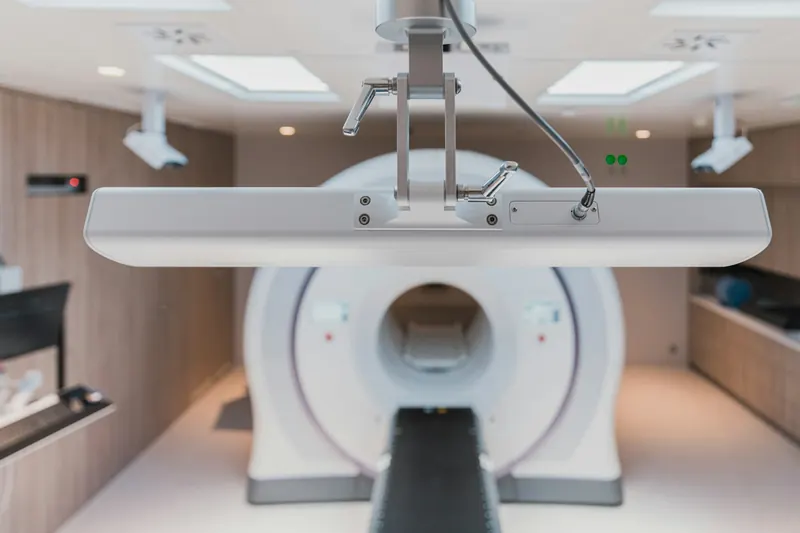
An MRI of the spine with contrast is the main test. It shows the location, size and likely type of the tumour and how it relates to the spinal cord. A CT scan may be used to look at the bones, and scans of the body may be advised if the tumour could have spread from elsewhere. The final diagnosis comes from examining the removed tissue under a microscope.
Treatment options
Step 1
Without surgery
Small tumours that are not causing symptoms, especially those that look benign, may be watched with regular MRI scans. Pain relief and physiotherapy can help with symptoms.
Read moreShow less
Tumours that have spread to the spine from cancer elsewhere are often treated with radiotherapy, chemotherapy or other cancer treatments, sometimes along with surgery. The plan is made together with cancer specialists.
If needed
When surgery helps
Surgery is usually advised when a tumour is pressing on the spinal cord or nerves and causing pain, weakness or numbness, or when it is growing. For many benign tumours, such as meningiomas and schwannomas, careful surgery can often remove the whole tumour.
Read moreShow less
Spinal cord tumour surgery is done under an operating microscope, often with nerve monitoring during the operation to help protect the spinal cord. If the spine needs extra support after the tumour is removed, screws and rods may be used.
Sudden weakness or loss of bladder control from a spinal tumour is an emergency and needs urgent assessment.
Recovery and outlook
After surgery, most people start walking with help within a few days, depending on their strength before the operation. Physiotherapy is an important part of recovery.
Read moreShow less
Recovery of strength and feeling depends a lot on how much weakness there was before surgery and how long the pressure lasted. This is why early diagnosis matters. Regular MRI scans are advised after surgery to check that the tumour has not come back.
Questions patients ask
Is a spinal cord tumour always cancer?
No. Many spine tumours, such as meningiomas and schwannomas, are benign (non-cancerous). Tumours in the bones of the spine are more often cancer that has spread from another part of the body.
Can a spine tumour be mistaken for a slip disc?
Yes, early symptoms like back pain and tingling can look similar. Pain that is constant, worse at night, or comes with increasing weakness or numbness should be checked with an MRI.
Can spinal cord tumour surgery cause paralysis?
Any surgery near the spinal cord carries a risk of new weakness or numbness, which may be temporary or, less often, permanent. The risk depends on where the tumour is and whether it is inside the spinal cord. Your neurosurgeon will explain the risks and benefits for your case.
How long is the hospital stay?
Usually several days, depending on the operation and how recovery goes. Some people need a period of rehabilitation afterwards to regain strength.
Will the tumour come back?
Benign tumours that are fully removed often do not come back, but some can. Follow-up MRI scans help detect any regrowth early.
Disclaimer: This information is for general awareness and is not a substitute for a medical consultation. Read moreSource: Content on this website was prepared with the help of AI tools (AI-assisted) and is medically reviewed by Dr. Kshitiz Nigam, MBBS, MS, MCh (Neurosurgery), Reg. No. MP-33282.